
Article: Why Slow Fashion Costs More — And Why It Should
Why Slow Fashion Costs More — And Why It Should
There is a moment most women know well. You find a blouse — silk-like, beautifully draped, impossibly priced at forty dollars — and something in you hesitates. Not because of the price. Because of it. The question isn't why is this so expensive? It's the quieter, more unsettling one: how is this so cheap?
That instinct is worth following.
The true cost of a garment is rarely what appears on the tag. Behind every piece of clothing lies a chain of decisions: who made it, how long it took, what materials were chosen, which corners were or weren't cut. In a world of fast fashion, those decisions have been optimised for one outcome only — the lowest possible number at checkout. Slow fashion, and artisanal fashion in particular, is built on a different set of priorities entirely. Understanding the difference is not about guilt. It's about clarity.
What It Actually Takes to Make a Garment Well
Consider a handcrafted dress from an artisanal womenswear house. Before a single seam is stitched, decisions have already been made that most mass-market labels never entertain.
The fabric is sourced from mills where weave density, fibre integrity, and dye consistency are non-negotiable criteria. Natural fibres — fine wools, mulberry silks, long-staple cottons — are grown, harvested, and processed with far less chemical intervention than their synthetic counterparts, a process that takes time and commands a price that reflects it. A metre of quality fabric from a reputable European or Indian mill costs multiples of what a synthetic alternative might. That differential is felt long before scissors meet cloth.
Then comes the cut. In artisanal fashion, pattern-making is a craft in itself. A skilled pattern cutter reads fabric the way a musician reads notation — understanding how it will move, how it will age, where it will stress. Patterns are refined across multiple samples, adjusted for the specific weight and drape of each fabric. This is not a task automated by software. It requires hands, eyes, and years of accumulated knowledge.
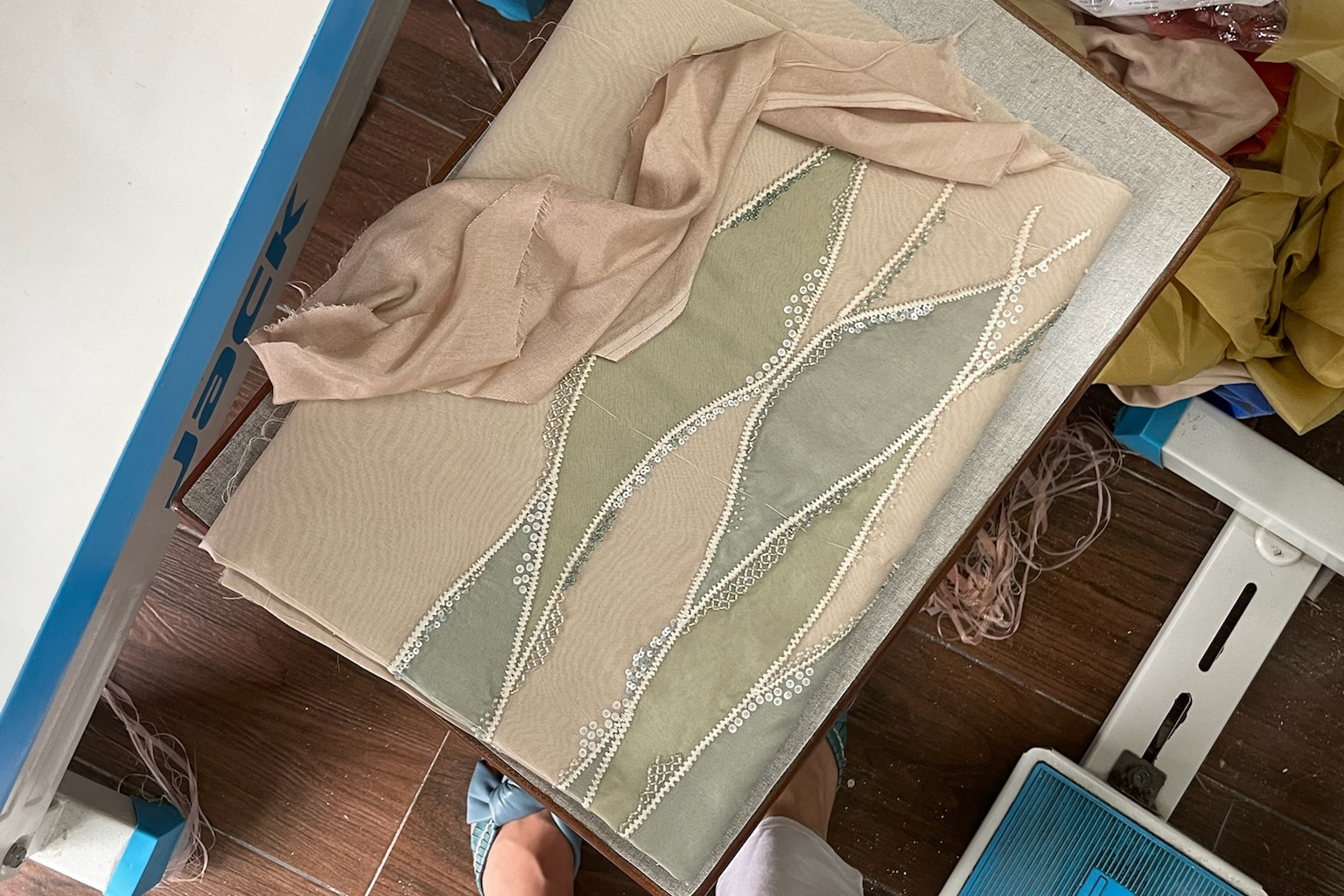
The construction that follows is where the hours truly accumulate. Hand-finished seams, carefully pressed hems, considered lining choices — these details don't add minutes to production time, they add hours. A single tailored jacket, made with integrity, can require twelve to twenty hours of skilled labour. At a living wage, that labour cost alone places the garment in a category most fast fashion cannot touch.
The Hidden Arithmetic of Fast Fashion
The forty-dollar blouse exists because someone, somewhere in a supply chain, absorbed a cost that wasn't passed to you.
Fast fashion operates on volumes that would be staggering if made visible. A single major retailer might release tens of thousands of new styles per year. To make this model work, fabric quality is reduced to its cheapest viable option, production is concentrated in factories where labour costs are minimised, and garments are designed with a lifespan measured in wearings rather than years.
The model is also predicated on speed — trend cycles compressed from seasons into weeks, with styles moving from sketch to shop floor in as little as two weeks. That acceleration has a texture: fabrics that pill after three washes, dyes that fade within a season, seams that open under ordinary wear. These are not accidents. They are, in the bluntest terms, a design feature.
The environmental costs — water use, chemical discharge, textile waste in landfill — are real, but they need not be the entry point for this conversation. The simpler question is one of value: a garment that lasts six months, purchased six times over a decade, costs more than one that lasts the decade itself. The arithmetic is rarely done at the point of purchase.
Craft as an Investment in the Garment
Handcrafted clothing carries a different relationship with time — both in its making and in its wearing.
There is something instructive in the way traditional tailoring houses have always operated. A client commissioning a coat in Savile Row, or a sari blouse from a skilled craftsperson in Varanasi, is not simply buying fabric and labour. She is buying accumulated knowledge — technique passed between generations, refined through thousands of iterations, expressed in the particular way a collar lies flat or a gather falls with natural ease.
This is what separates artisanal garments from their industrially produced counterparts: not merely the materials or the hours, but the intelligence embedded in the construction. A well-made garment knows things. It knows how to move with a body, how to hold its shape through repeated wear, how to age into itself rather than deteriorating.
Quality over quantity is not simply a purchasing philosophy — it is a description of how good craft actually works. A wardrobe of fewer, better pieces functions differently from one filled with volume. The pieces that last become familiar, trusted, expressive of something personal. They stop being purchases and become possessions.
The Maker Behind the Garment
In luxury womenswear, the human element is not incidental. It is the point.
When a garment passes through the hands of a skilled artisan — a weaver, an embroiderer, a tailor who has spent twenty years understanding how to ease a sleeve — it carries that encounter. Not sentimentally, but materially. The decisions made at each stage of production, the adjustments, the refinements, the small acts of professional pride that go unseen but are felt in the wearing — these accumulate into the final piece.
Mass production cannot replicate this, not because machines lack precision, but because craft is not only about precision. It is about judgement. The ability to look at a piece of cloth and know, from experience, how it wants to be cut. The knowledge that a hem hand-stitched in a particular way will hold for years where a machine-sewn alternative will not. These are not efficiencies to be optimised away. They are the substance of the garment.
The price of an artisanal piece reflects, among other things, the cost of preserving that knowledge — of paying the people who hold it what their expertise is worth.
Rethinking What "Expensive" Means
Language shapes the way we think about value, and few words do more distorting work in fashion than expensive.
A garment is expensive relative to something. Usually, that something is the cheapest available alternative. But if that alternative dissolves in the wash, fades at the shoulders, and ends up in a donation bag before the year is out, the comparison was never quite fair. A more honest calculation runs over time: cost per wearing, over the realistic lifespan of the piece.
A well-constructed wool coat, cared for properly, can companion a woman through fifteen winters. Divided across those years, across the occasions it anchors, the cost per wearing becomes quietly unremarkable. The same coat bought cheaply and replaced three times over that period costs more — in money, in time spent shopping, in the particular frustration of a garment that never quite delivers what it promised.
This is not an argument that everything should cost more. It is an argument that the price of a garment is not legible in isolation. It requires context: the quality of the materials, the conditions of the making, the longevity of the result.
The Art of Buying Less, Better
There is a particular kind of confidence that comes from a wardrobe built on fewer, considered pieces — garments that fit well, hold their form, and remain relevant because they were never chasing a trend in the first place. Timeless elegance is not a style category. It is what happens when a garment is designed without the pressures of a six-week trend cycle.
Conscious purchasing does not require austerity. It requires attention — to craft, to longevity, to the question of whether a piece will still matter to you in five years. A woman who knows her own taste, who invests slowly and wears thoughtfully, needs less than she might imagine. And what she has, she knows.
That, at its core, is what artisanal fashion offers: not merely clothing, but a different relationship with the act of dressing. One built on knowledge rather than volume, on lasting quality rather than immediate gratification.
The price reflects it. And rightly so.